D-DU-UDU-D-DU-UDU
Shuffle and the Six-Eight Lilt
A bar of 6/8 has two main beats, each divided into three. Count it **1-2-3, 2-2-3** with the emphasis on 1 and on the second "2". The trap is counting six even beats: that turns the song into a jig and makes every phrase sound clipped.
Strum: D-DU-UDU-D-DU-UDU · Metre: 6/8 · Tempo: 60-100 bpm · Level: intermediate
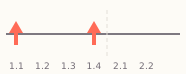
Six-eight is two beats, not six
A bar of 6/8 has two main beats, each divided into three. Count it 1-2-3, 2-2-3 with the emphasis on 1 and on the second "2". The trap is counting six even beats: that turns the song into a jig and makes every phrase sound clipped.
Written as a strum pattern, one bar of 6/8 is D-DU-UDU played twice — six contacts per main beat, twelve per bar. Slow the pattern down and let the thirds breathe.
Shuffle: the same idea applied to 4/4
A shuffle takes a 4/4 bar and plays each pair of eighth notes as a long-short triplet, roughly 2:1. Written out, a shuffle bar of D-DU-UDU becomes D--DU-U--DU, with the first note of each pair held longer.
- Straight eighths: even, modern, good for pop and folk.
- Shuffle eighths: uneven, older, good for blues, mento, early jazz and most pre-1950 folk recordings.
- Your ear decides: hum the melody and see which one matches the recording in your head.
Where the lilt comes from
The lilt is not in the strumming hand, it is in the accent. In 6/8 the first of each group of three is accented and the third is slightly lighter than the second. Play the same three notes with even weight and the lilt vanishes immediately.
Practise by playing one chord for a full minute with a metronome on the two main beats only. If your hand is drifting, you will hear it against the click within ten seconds.
Songs in this book that use it
Greensleeves is the clearest 6/8 example: three strums per beat, two beats per bar. Sakura Sakura is often notated in 4/4 but is sung with a lilt; playing it with a shuffle strum gets closer to the traditional feel than straight eighths do.
Sheets that use this
- Greensleeves — Am · D-DU-UDU
- The Water Is Wide — C · D-DU-DU
- Sakura Sakura — Dm · D-DU-UDU
Questions that come up
Is a shuffle the same as swing?
Close enough for a ukulele accompaniment. Swing is the jazz term for the same long-short subdivision; shuffle is the blues and folk term. Both describe playing the first of a pair longer than the second.
Can I shuffle a 3/4 waltz?
No — a waltz has three beats per bar and a shuffle needs pairs. Shuffling a waltz gives you six uneven beats, which is a different metre and will not line up with the melody.