Dm · GCEA
Sakura Sakura
A pentatonic melody that has no fourth and no seventh, which is why it sounds like nothing else in this book. The chords you add have to respect that.
Tuning: GCEA · Capo: none · Tempo: 72 bpm · Metre: 4/4 · Level: intermediate


Words and music: Traditional Japanese melody of the Edo period, published in collection form from the 1880s. Public domain.
The sheet
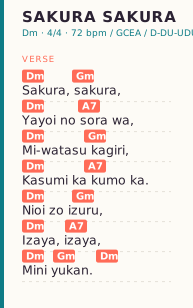
 D-DU-UDU
The missing notes
The melody is built on a pentatonic scale without the fourth or the seventh degree. In D minor that means no G and no C natural in the melody, even though the Gm chord contains a G. The result is a scale that sounds both ancient and unresolved, and it is why Western harmonisations of this tune so often sound wrong.
Practical rule: keep your strumming light and let the melody lead. If you add a chord that fights the melody, drop it and play an open fifth instead.
Two chords and a colour
Dm, Gm and A7 carry the song. Gm (0231) has no barre and is one of the easier three-finger shapes. A7 (0100) is a single finger.
- The A7 in bar two and bar four is a half cadence — it should feel like a question, not an answer.
- Play the final Dm quietly. The traditional performance ends as if the singer has simply stopped rather than finished.
- The C chord is available if you want a Western colour in the last line. Purists will notice. It still works.
The words
Sakura means cherry blossom; yayoi no sora wa means the sky of the third month (the lunar month of the blossoms); kasumi ka kumo ka asks whether what you see is mist or cloud. The whole lyric is a single image held for eight bars. Do not dramatise it — the restraint is the point.
Questions that come up
Why does the sheet print Dm instead of D minor pentatonic?
Because chord frames are the vocabulary of a ukulele songbook. The scale is what the melody uses; the chords are what you strum under it. Both statements are true at once.
Is the melody different in different regions of Japan?
Yes. The version printed here is the one standardised in Meiji-era school songbooks, which is now the version known internationally. Regional folk versions vary in the third and fourth phrases.