C · GCEA
The Water Is Wide
A three-chord waltz with a melody that goes exactly where your voice wants it to. The best song in this book for practising a slow, even strum.
Tuning: GCEA · Capo: none · Tempo: 72 bpm · Metre: 3/4 · Level: beginner


Words and music: Traditional ballad of Scottish origin, collected in England and Appalachia in the 19th century (Roud 108). Public domain.
The sheet
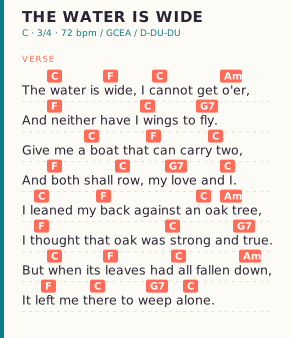
 D-DU-DU
Three chords, one shape change
C to F to G7 and back. Nothing is barred, nothing is stretched, and the Am appears only once per verse. If you can play Twinkle, Twinkle you can play this tonight.
The arrangement depends on one habit: hold the C shape, then slide only the middle finger to make F. The ring finger stays on the A string's third fret for both chords.
Keeping a waltz even
In 3/4 the temptation is to play 1 loud, 2 and 3 quiet. Resist it. For a slow ballad play all three beats at nearly the same weight, with only a slight lean on beat one:
- Beat 1: downstroke, full contact.
- Beat 2: down-up, lighter.
- Beat 3: down-up, lighter still, and let the last upstroke ring into the next bar.
At 72 bpm this creates a rocking motion rather than a pulse, which is what a lullaby-like ballad needs.
Where singers lose the tune
The melody of bar two ("and neither have I wings to fly") steps down a fourth and then back up. Sing that interval before you play. If you start the verse too high you will not have room for it — beginners routinely begin this song a third too high and run out of range on the last line.
Questions that come up
Is this the same as "O Waly, Waly"?
They share the tune family and the first line. O Waly, Waly is the English set with different later verses; the version printed here is the Appalachian one.
Can I fingerpick it instead?
Yes, and it suits fingerpicking better than strumming. Use thumb on the C string for beats and index-middle on the top two strings; the melody notes fall naturally on the thumb.