C · GCEA
Silent Night
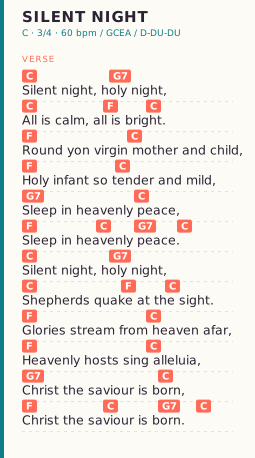
The slowest song in this book and the easiest to ruin. Three chords, one strumming pattern, and no room for a rushed bar anywhere.
Tuning: GCEA · Capo: none · Tempo: 60 bpm · Metre: 3/4 · Level: beginner


Words and music: Words: Joseph Mohr, 1816. Music: Franz Xaver Gruber, 1818. Public domain.
The sheet
 D-DU-DU
Sixty beats per minute, and that is fast
The tune was written for a guitar and a choir in a village church in Austria, and it is meant to be sung slowly enough that the chords have time to change colour. At 60 bpm each bar takes three seconds. Most performances you hear run at 75 or 80 and sound rushed.
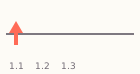
- One downstroke on beat 1, down-up on beats 2 and 3.
- Let every chord ring into the next. Do not stop the strings.
- The last line slows down: "sleep in heavenly peace" is the only place where a ritardando is expected.
Three chords, no barres
C, F and G7 cover the whole song. C7 appears in some printed versions before the F in line four; it is optional. Nothing here requires a stretch larger than two frets.
The 1818 origin
Joseph Mohr wrote the words in 1816 and asked Franz Xaver Gruber for a tune in 1818 because the church organ in Oberndorf had broken — probably because of flood damage to the pipework. The first performance was accompanied by guitar, which is exactly what you are doing. That is also why the melody is so singable: it was written for a congregation, not for trained singers.
Questions that come up
Is it really the same tune everywhere?
Almost. Silent Night was declared an intangible cultural heritage item by UNESCO in 2011, and there are regional variants in the second half of each line, but the version on this sheet is the one printed in virtually every carol book.
Should I add the C7?
Only if you can make the change without a pause. At this tempo a fumbled chord change is much more audible than a missing seventh.