A · GCEA
Red River Valley
The first song where you need a chord outside the C-G family. Three shapes in A, one of them a barre you can cheat on.
Tuning: GCEA · Capo: none · Tempo: 88 bpm · Metre: 4/4 · Level: beginner


Words and music: Traditional North American song, printed in sheet-music form from the 1890s. Public domain.
The sheet
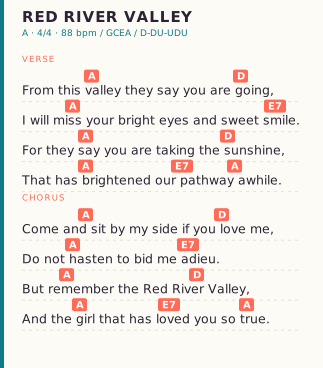
 D-DU-UDU
Three chords and where the barre is
A (2100) is a two-finger shape with the index on the G string's second fret. D (2220) is the familiar triangle. E7 (1202) is the awkward one: index on the G string's first fret, middle on the C string's second, pinky on the A string's second. Nothing is barred, but the pinky stretch is the widest thing you have played so far.
If the pinky refuses, use E7 as 1200 for a moment — it is missing the seventh but it is still a usable dominant, and it will get you through a sing-along. Then go back and fix it in practice.
Where the chord changes actually fall
The pattern here is two bars of A, two of D, two of A, two of E7. That gives the singer a full bar to breathe between changes. Count out loud: 1-2-3-4, 2-2-3-4, 3-2-3-4, 4-2-3-4 and change on the next downbeat.
- Change chords on beat one, never a beat early.
- The E7 in the verse arrives on the word "smile" — say the word, then change.
- Chorus: same shape, brighter dynamic. This song is a farewell; the chorus should sound like an invitation, not a lament.
Key choice for groups
The written key is A. Most groups end up in G because it sits lower and more voices can reach the top line. Capo 0, shapes G-C-D7. If you want the written key without relearning the shapes, capo 2 and play G shapes — that sounds in A.
Questions that come up
Why does E7 need four fingers?
Because the ukulele's top string is tuned to A: a proper E7 needs the G sharp on the third string and the B on the fourth. 1202 puts the root on the G string, the third on the C string and the seventh on the top string, which is the most compact full voicing available.
Is this the same tune as "Cowboy's Lament"?
No, though they are often confused. Red River Valley is a parting song in 4/4 with a narrow range; Cowboy's Lament (Streets of Laredo) is a different melody entirely.