C · GCEA
My Bonnie Lies Over the Ocean
A waltz with a three-bar opening and a chorus that trips up anyone who counts in four. The song that taught a generation of guitar players how to change chords on beat one.
Tuning: GCEA · Capo: none · Tempo: 100 bpm · Metre: 3/4 · Level: beginner


Words and music: Traditional Scottish song, printed in songbooks from the 1880s. Public domain.
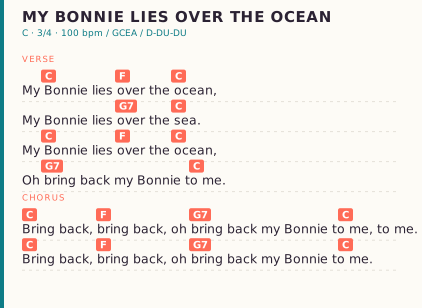
The sheet
 D-DU-DU
The famous 3/4 that sounds like 4/4
The verse is three bars long, not four. Everyone who has ever sung this has felt the floor move under them the first time. Count 1-2-3 for the first line, then the second line is also three bars, and the third line's third bar carries the pickup into the chorus.
The chorus is the part everyone knows: "Bring back, bring back…" and it is in strict waltz time with a repeated pattern. Practise the join between verse and chorus separately — that seam is where the song falls apart.
The C7 you can skip
The tune uses C and F and G7 in the verse. A C7 appears in many printed versions before the F in the chorus. It is optional; play it if your fingers can make the change at tempo, skip it if not. Nobody has ever noticed its absence.
Words and variants
The traditional text is Scottish in origin and travelled widely; "Bonnie" is simply a term of endearment (and here it reads as a person, not an adjective). Some versions replace "Bonnie" with a name. Sing it either way — there is no authoritative text, and this one has been in print for well over a century.
Questions that come up
Why three bars and not four?
Because the tune is a Scottish waltz built from three-bar phrases, which is common in older Scottish song. It is not a printing error and it is not a bar missing.
Can I play it in 4/4 to make it easier?
You can, and it becomes a different song: the words crowd and the phrase loses its lilt. If 3/4 is causing trouble, slow down instead of re-barring.