C · GCEA
Danny Boy
The widest melody in this book: an octave and a fourth, with no place to hide. Slow, quiet, and the single best test of whether your strumming hand can stay steady while you sing.
Tuning: GCEA · Capo: none · Tempo: 66 bpm · Metre: 4/4 · Level: intermediate


Words and music: Words: Frederic Weatherly, 1913, set to the traditional air "Londonderry Air" (published 1855). Public domain.
The sheet
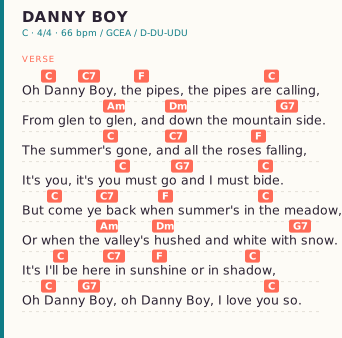
 D-DU-UDU
The C to C7 move is the whole song
Every line begins with C and moves to C7 before reaching F. That one-finger change, from 0003 to 0001, is what makes the harmony lean forward. Play it lazily and the song sags; play it cleanly on the beat and the whole verse opens up.
- C (0003): ring finger on the A string's third fret.
- C7 (0001): index finger on the A string's first fret.
- The two shapes are identical apart from which fret the finger sits on. Slide, do not lift.
Range and where to breathe
The melody spans from the C below middle C to the F a fourth above the octave. That is a big ask for an untrained voice. Three practical fixes:
- Sing it in C if you have a high voice, and in A or G if you do not. Capo 0 with G shapes (G, G7, C, Am, D7) is the low version.
- Breathe at the comma after "calling" and after "falling". Those are the only two gaps.
- On the last line, do not push. The final "I love you so" needs less volume than the line before it, not more.
Why the tempo is 66
This song is ruined by speed more than by any other mistake. At 66 bpm each bar is nearly four seconds long, and the melody needs that space to bend. If you find it dragging, add a single quiet instrumental bar between the verses instead of speeding up.
Questions that come up
Is the tune Irish and the words English?
Yes. The melody is the Londonderry Air, an Irish traditional tune published in 1855; the words were written in 1913 by the English lawyer Frederic Weatherly. The combination is one of the strangest and most successful marriages in song.
What does "bide" mean?
To remain or wait. "I must bide" means I must stay here while you go. It is a Scots and northern English word and it is a full rhyme with "side".