D · GCEA
Waltzing Matilda
Australia's unofficial national song, written about a swagman who steals a sheep and drowns rather than be caught. Bright tune, grim story, and one chord that catches everybody.
Tuning: GCEA · Capo: none · Tempo: 108 bpm · Metre: 4/4 · Level: intermediate


Words and music: Words: A. B. Paterson, 1895. Tune: "Craigielee" by Christina Macpherson; the familiar arrangement is Marie Cowan's of 1903. All long out of copyright.
The sheet
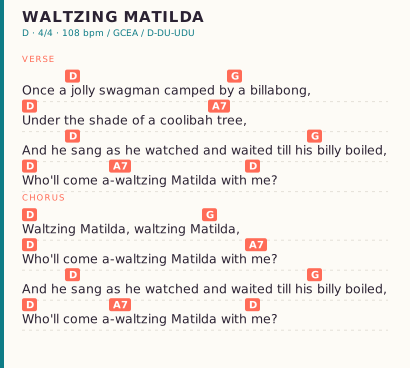
 D-DU-UDU
The A7 that catches everybody
The fourth bar of the verse drops to A7 and back to D inside two beats — "coolibah tree" is where it happens. It is the fastest change in the song and the one place where a group will visibly stumble. Play it twenty times on its own, starting slowly with a pause on the A7.
Words that need translating
This song is full of Australian slang and none of it is optional if you want the story to make sense:
| Word | Meaning |
|---|---|
| swagman | an itinerant worker carrying his bedroll (a swag) |
| billabong | a pool left behind by a river |
| coolibah | a eucalyptus tree that grows near water |
| billy | a tin can for boiling water |
| jumbuck | a sheep |
| tucker bag | a food sack |
| squatter | a landowner |
| troopers | mounted police |
The story: the swagman catches a sheep, stuffs it in his tucker bag, the squatter arrives with three troopers, and the swagman jumps into the billabong rather than be taken. The chorus is his ghost still singing. Sing it brightly — that contrast is the whole point of the song.
Playing it at 108
Fast but not frantic, in 4/4. The pattern is the island strum. The chorus repeats the last two lines of the verse exactly, so once you have one you have both.
Questions that come up
Is it really about suicide?
Yes, though the 1895 text puts it gently: "And his ghost may be heard as you pass by that billabong." The tune is cheerful on purpose, which is exactly why Australians argue about it.
Which tune is the "real" one?
There are several. The 1895 original was set to Christina Macpherson's "Craigielee"; the version everybody knows today is Marie Cowan's 1903 arrangement used in a tea advertisement. This sheet follows the familiar one.